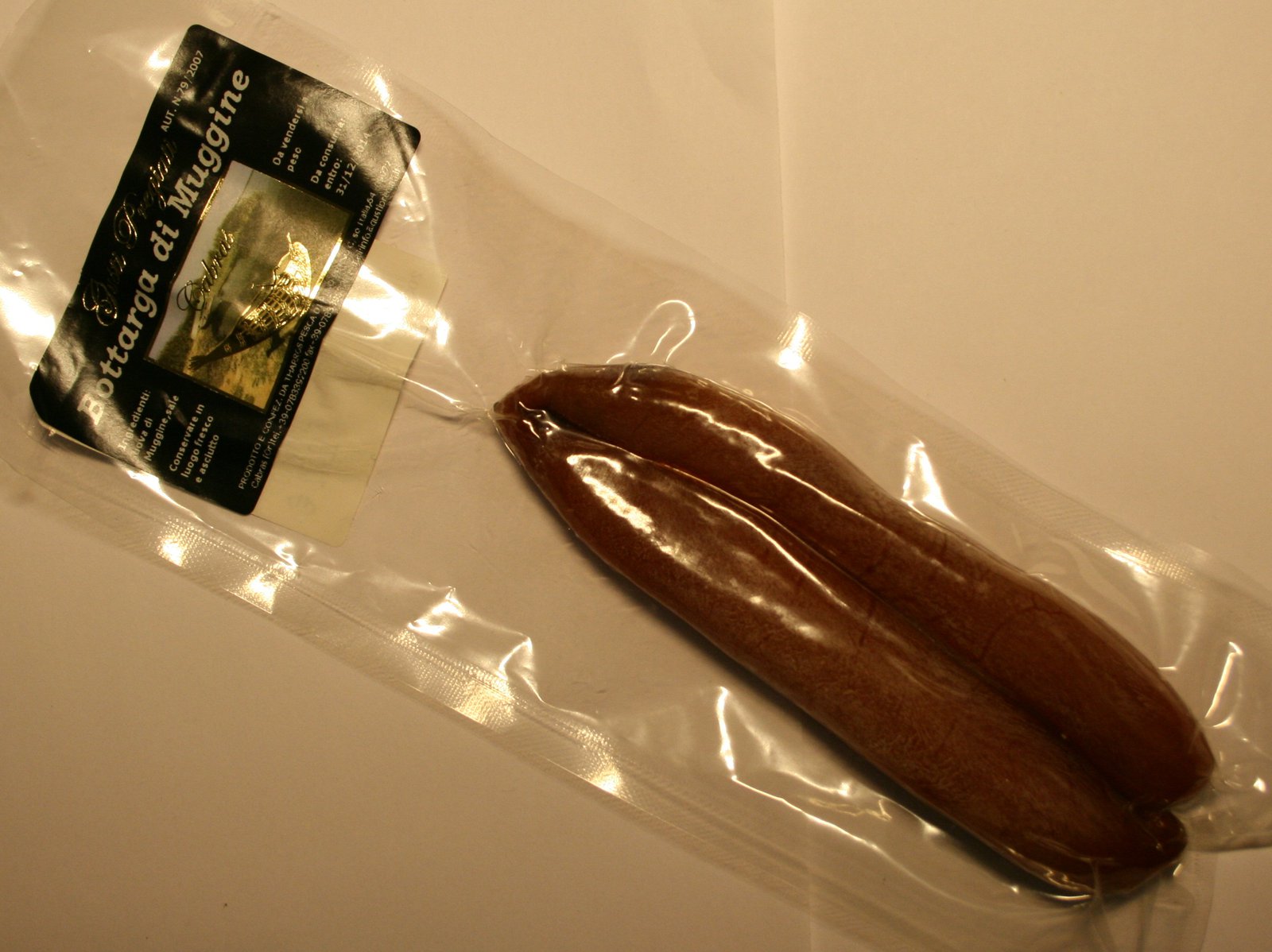
1. Bottarga di Muggine: The Salt-Cured Amber of Nora
The coastal lagoon behind Nora (Stagno di Nora) has served as an active fishing ground since the Bronze Age. The crown jewel of this coastal harvesting tradition is Bottarga di Muggine—the intact whole egg sacs of female grey mullet (Mugil cephalus), gently extracted by hand, salted in sea salt for several hours, pressed between timber planks, and dried in coastal sea breezes until firm and deep amber-orange in hue.
First introduced to Sardinia by Phoenician maritime merchants in the 8th century BC, authentic bottarga delivers an intense, savoury umami finish characterized by hints of almond, brine, and iodine. Unlike commercial grated powders sold in supermarkets, authentic trattorias in Pula shave whole lobes into paper-thin slices over raw artichoke hearts (carciofi sardi spino) with extra-virgin olive oil, or grate generous mounds over steaming plates of spaghetti alla bottarga made with hand-crushed garlic and sweet cherry tomatoes.
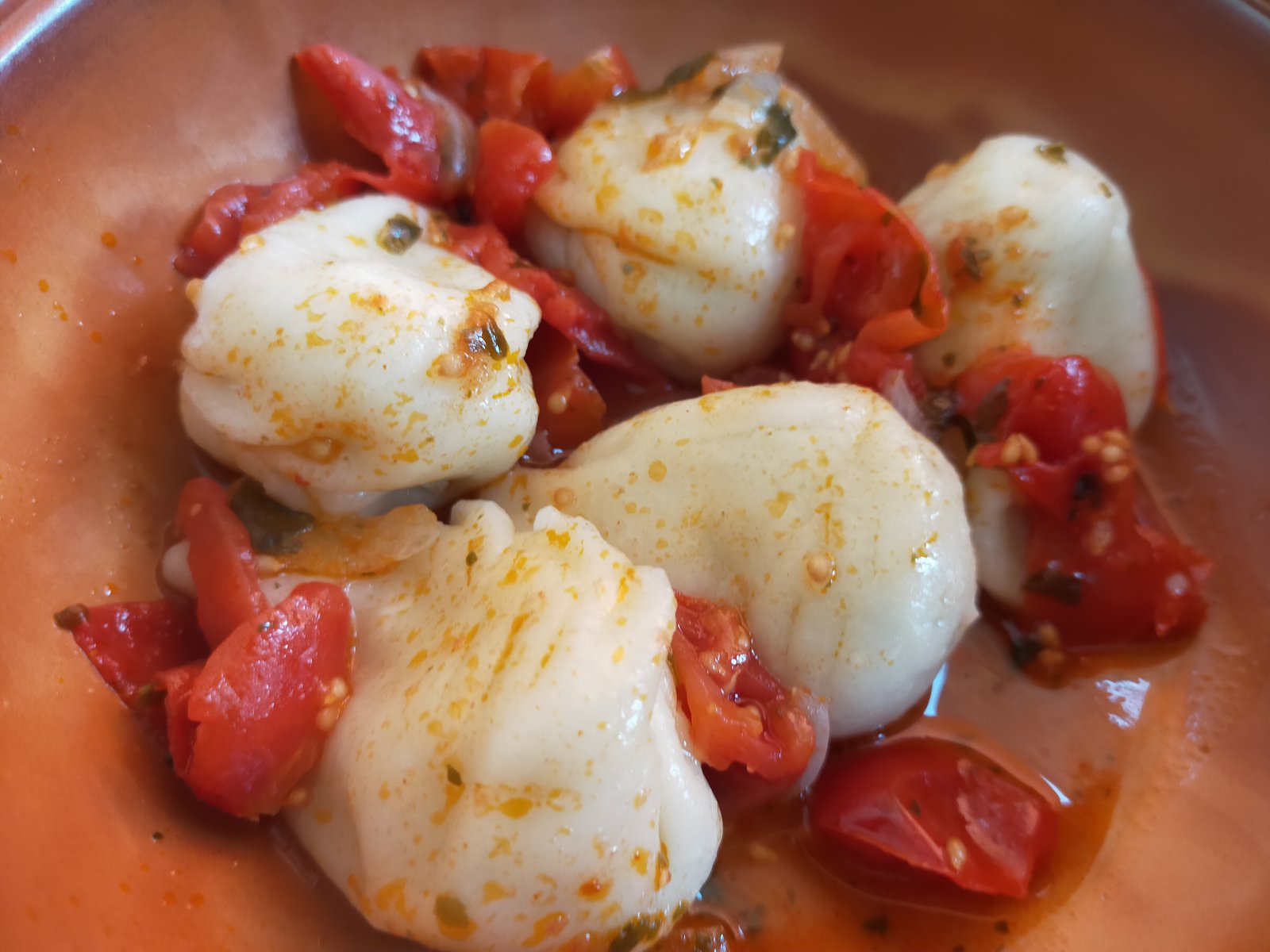
2. Handmade Pasta: Culurgiones & Fregula con Arselle
The inland hills immediately rising behind Pula transition into pastoral mountain terrain where Sardinian pasta traditions dominate the family table:
- Culurgiones: The iconic pocket dumpling of southern and central Sardinia. The filling combines boiled Colfiorito potatoes, grated stagionato Pecorino Sardo, animal lard, garlic, and fresh garden mint (menta). Each dumpling is pinched closed by hand using a rapid thumb-and-forefinger motion that creates an intricate braided wheat-ear seam (sa spighitta), historically crafted as a fertility symbol for the summer grain harvest. They are served simply with fresh pomodoro sauce and grated pecorino.
- Fregula con Arselle: Fregula consists of coarse durum wheat semolina hand-rubbed with salted warm water in a circular earthenware bowl (sa scivedda) to form small spheres, which are then toasted in an oven until golden brown. In Pula, it is simmered in a fragrant seafood broth with freshly harvested local clams (arselle), garlic, white wine, and Italian flat-leaf parsley.
3. Viticultural Heritage: Carignano del Sulcis & Nuragus
The sandy, saline soils surrounding Nora and the adjacent Sulcis archipelago provide unique agricultural terroir. Uniquely in western Europe, the phylloxera aphid cannot survive in pure coastal sand dunes; consequently, many old vines in the southwestern region are ungrafted (piede franco), growing on their original 19th-century rootstocks.
Essential Regional Wine Pairings:
- Carignano del Sulcis DOC: A deep ruby red displaying notes of wild blackberry, Mediterranean scrub (myrtle, rosemary), and dark spices. Pairs exceptionally with roasted suckling pig (porceddu) and aged sheep cheeses.
- Nuragus di Cagliari DOC: An ancient white varietal cultivated since Phoenician times, crisp and minerally with pale citrus aromas, perfect alongside raw coastal crudo and grilled sea bass.
- Vermentino di Sardegna DOC: Brisk acidity and flinty saline notes, ideal with Nora lagoon mullets and spaghetti alla bottarga.
4. Pane Carasau, Seadas & Mountain Pastoral Sweets
No culinary portrait of southern Sardinia is complete without the ancient pastoral breads and festive desserts that have accompanied shepherds and fishermen for millennia:
- Pane Carasau & Pane Guttiau: Known historically as 'carta da musica' (sheet music bread) for its razor-thin, crispy texture, this twice-baked flatbread was engineered for shepherds during transhumance migrations, remaining edible for up to eight months. At Pula trattorias, it is frequently served warm as Pane Guttiau, brushed with fruity green extra-virgin olive oil, sprinkled with coarse sea salt crystals, and briefly toasted over charcoal embers.
- Seadas (Sebadas): The definitive Sardinian dessert. A large circular pastry disc made with durum wheat semolina and lard, encasing a filling of young, slightly acidic sheep's milk cheese (casu friscu) scented with grated lemon zest. It is deep-fried in olive oil until golden and blistered, then drizzled immediately with warm, bitter Corbezzolo (strawberry tree) honey. The contrast between molten savoury cheese and intense bitter-sweet honey is unforgettable.
- Cinghiale in Umido (Wild Boar Stew): In the autumn and winter months, trattorias in the foothills of Domus de Maria serve wild boar marinated overnight in full-bodied Cannonau wine, wild juniper berries, bay leaves, and rosemary, slowly braised until the meat falls apart in rich, dark pan juices.